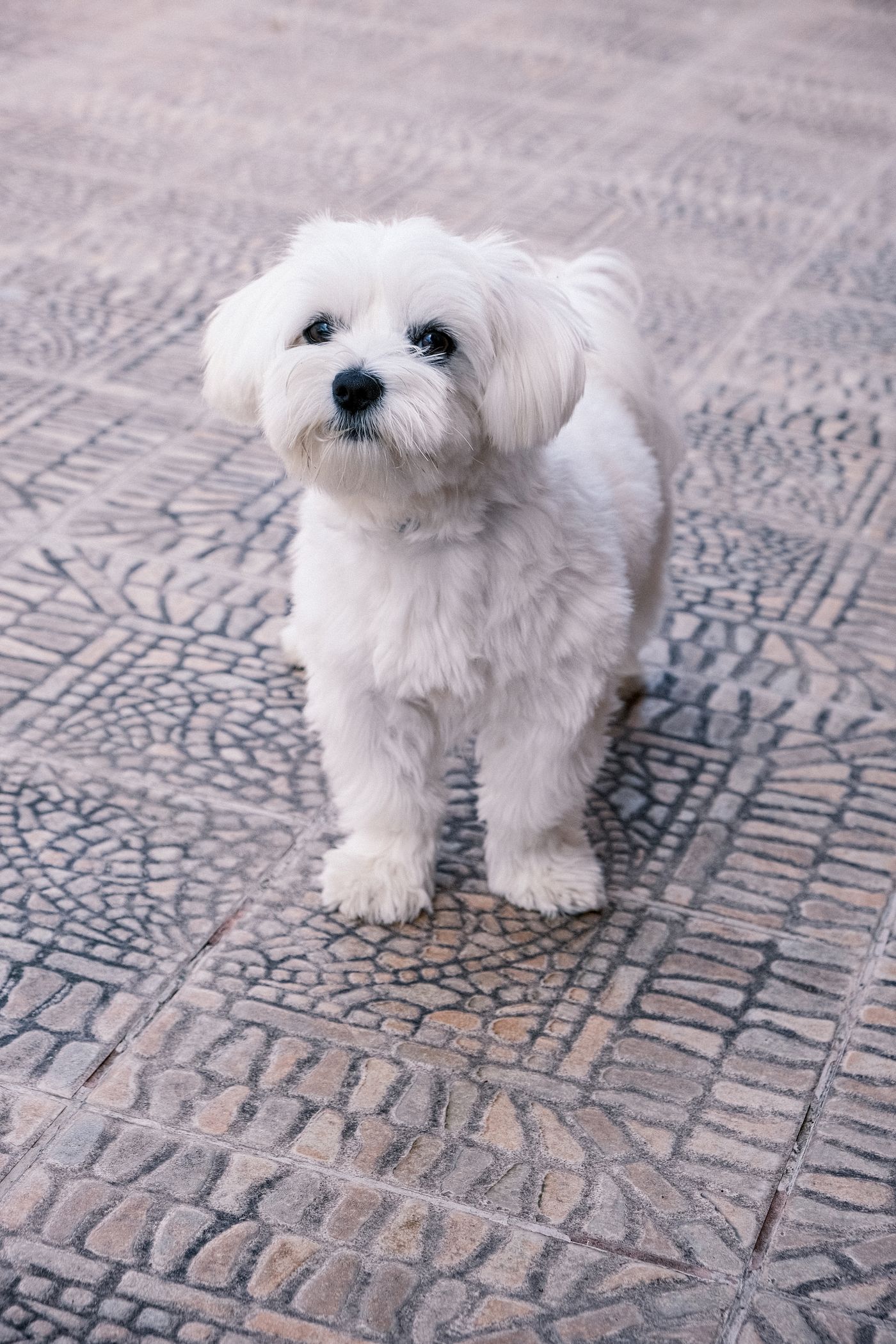
Short answer: pick the Maltese if you want the steadier, purely companion-bred temperament in a solid-white coat. Pick the Yorkie if you want a bit more terrier attitude and don't mind (or specifically want) the breed's signature steel-blue-and-tan coloring. Longer answer: these two breeds get lumped together constantly, both are toy-sized, both are low-shedding, both are AKC lap-dog staples, but the real differences show up in temperament and history, not in some vague "better breed" verdict. Here is the honest side by side.
Our take
The short version
The Maltese was bred for one job across roughly two thousand years: stay close and be loved, with no herding or hunting instinct bred into it at all. That shows up as a calmer, more even default temperament, and it is why the breed has long been a first choice for households that want devotion without a working-dog drive to manage. The Yorkie descends from a working ratting terrier, recognized by the AKC in 1885, and that heritage is still visible today: more boldness, more alertness to strangers and noise, and a personality that acts a size or two bigger than the dog actually is. Both breeds are capped at roughly the same weight by their own AKC standards, both shed very little, and both average in the low-to-mid teens for lifespan. If you are choosing on temperament and a purely companion-bred history, lean Maltese. If you want terrier boldness and a bit more pedigree history on paper, lean Yorkie.
The numbers and the temperament, together
Twelve points that actually matter when you are choosing between the two, not just breed-standard trivia.
Swipe sideways on a phone to see the Yorkie column.
| What matters | Maltese | Yorkie |
|---|
| Weight | Under 7 lbs by AKC standard, 4 to 6 lbs preferred | Must not exceed 7 lbs by AKC standard, no preferred range stated |
| Coat structure | Single coat, no undercoat, grows continuously like human hair | Single-layer coat, close to human hair, little to no undercoat |
| Shedding | Very low. A classic low-allergen toy breed, never allergy-free | Also very low, essentially a tie with the Maltese on this point |
| Temperament | Bred purely as a companion, no herding or hunting drive, generally even and devoted | Descends from a ratting terrier, bold and alert, can be territorial with strangers |
| With young kids | Fragile at this size, but a steadier, less reactive default temperament | Same fragility, plus a bolder terrier reaction to sudden movement or noise |
| Trainability | Intelligent and eager to please, but a known willful streak, notoriously hard to housebreak | Intelligent but independent-minded, also has a reputation as hard to housebreak |
| Exercise needs | Short daily walks plus indoor play | Short daily walks plus indoor play, about the same |
| Grooming | Daily brushing for a long show coat, or 2 to 3 brushings a week in a shorter puppy cut | Similar brushing schedule; many pet Yorkies are kept in a shorter puppy trim |
| Health testing to ask for | Patella, liver-shunt bile-acid test, cardiac evaluation, eye exam | Patella, eye exam (ACVO), liver-shunt bile-acid screening |
| Average lifespan | 12 to 15 years | 11 to 15 years per the AKC, nearly the same range |
| AKC recognition | 1888 | 1885, three years earlier |
| Typical price | $1,500 to $4,000 | Roughly $1,500 to $3,500 |
Pick a Maltese if
- You want a breed with zero working-dog drive behind it, bred purely to be a lap companion.
- You'd rather have the steadier, less reactive temperament around strangers and new situations.
- You like the classic solid-white coat as the breed's signature look.
- You want a family history that goes back to the ancient Mediterranean rather than a working mill town.
Pick a Yorkie if
- You want a little more terrier boldness and big-dog attitude in a small body.
- You specifically want the steel-blue-and-tan coloring instead of solid white.
- You like the idea of a slightly longer AKC-documented pedigree to check when vetting a breeder's lines.
- You're fine with a dog that alerts loudly to strangers and unfamiliar noise.
What a Yorkie actually is
If you have only ever seen a Yorkie in a bow and a sweater, the breed's actual background explains a lot about its personality.
A ratter's confidence in a 7-pound dog
Yorkshire Terriers were bred to hunt rats in English mill towns and mines before they became Victorian-era lap dogs, and the AKC recognized the breed in 1885. That working-terrier instinct is still visible today: boldness, sharp alertness, and a dog that does not act like it is small, even next to a breed like the Maltese that was never bred to work at all.
The coat that started its own allergy conversation
A Yorkie's coat is a single layer of fine, silky steel-blue-and-tan hair with little to no undercoat, which is why the breed is consistently named alongside the Maltese as one of the lower-shedding toy breeds. It mats if it isn't brushed regularly, which is why so many pet Yorkies wear a shorter, easier trim instead of the long show coat.
The honest part
Where the Yorkie genuinely wins
It would be easy for a Maltese site to only tell you what is good about a Maltese. Here is where the Yorkie is genuinely the better fit for some households, not a consolation prize.
- More documented generations. The AKC recognized the Yorkshire Terrier in 1885, three years before the Maltese's 1888 recognition. That gap means slightly more documented breed-club history to check when you are vetting a breeder's lines.
- A bolder, more assertive personality by design. If you specifically want a small dog with big-dog confidence and a working-terrier streak rather than a purely decorative companion temperament, the Yorkie was bred for exactly that, and the Maltese was not.
- A coat color option the Maltese standard doesn't offer. The Maltese breed standard calls for solid white. If you want the classic steel-blue-and-tan look instead, that is a Yorkie trait, full stop.
Still deciding
Where the Maltese's own history fits in
The Maltese's temperament isn't an accident. It traces to a specific place and a specific job, or rather, the lack of one. Read the full story on why the Maltese is a Mediterranean breed for the context behind the coat, the size, and the personality this comparison is built on.
Maltese vs Yorkie, quick answers
Is a Maltese or a Yorkie better for allergies?
Both are low-shedding, single-coated breeds with no undercoat, and plenty of allergy-sensitive owners do fine with either one. Neither is allergy-free, and reactions vary person to person and dog to dog. If allergies are a real concern, spend time with an adult dog of the specific breed, more than once, before you commit.
Which is easier to train, a Maltese or a Yorkie?
Honestly, neither has a clear edge. Both breeds are intelligent, but both also carry a reputation among trainers and vets as two of the more stubborn, harder-to-housebreak toy breeds, the Maltese for its willful streak and the Yorkie for its independent terrier mind. Positive reinforcement, consistency, and an early start matter more here than which of these two breeds you pick.
Are Maltese or Yorkies better with young kids?
Both are fragile at under 7 pounds, so any interaction with young kids needs supervision and floor-level handling either way. The Maltese was bred purely as a companion, with no herding or hunting drive, and tends to have a steadier, less reactive default temperament. The Yorkie's terrier background makes it bolder and quicker to react to sudden movement or noise, which is part of why breed resources often suggest waiting until kids are 5 or older for a Yorkie specifically.
Do Maltese or Yorkies shed more?
About the same, and both are near the low end for shedding. Both breeds have a single coat with little to no undercoat, closer to human hair than typical dog fur, which is why both show up constantly in low-allergen breed searches. This is one of the closer ties in the whole comparison.
Which is smaller, a Maltese or a Yorkie?
Essentially tied at the top end. The AKC standard caps both breeds at under 7 pounds. The Maltese standard goes a step further and states a preferred range of 4 to 6 pounds, while the Yorkie standard sets the 7-pound ceiling without a stated preferred range. If you want the breed whose own written standard nudges toward the smallest end, that's the Maltese; in practice, individual dogs of both breeds land all over that same under-7-pound range.
Which breed lives longer, a Maltese or a Yorkie?
Close to a tie. The Maltese averages 12 to 15 years. The AKC lists Yorkshire Terrier life expectancy at 11 to 15 years. The ranges overlap almost entirely, and general care, weight management, and dental health matter more to an individual dog's lifespan than this small a gap between breed averages.